

How Long Does It Take to Learn Arabic? How long does it take to learn Arabic? For most beginners, learning the Arabic alphabet can take two to four weeks, reading simple Arabic often takes one to two months, while reading confidently usually requires three to six months of consistent study. If your goal is conversational Arabic, expect a journey of around one to two years. For learners interested in understanding the Quran, the timeline depends on how deeply they want to study Quranic Arabic and how consistently they practise.
There is no single answer that applies to everyone. Your progress depends on several factors, including your learning goals, study routine, lesson frequency, previous language experience, and the guidance you receive along the way.
Whether you want to communicate in Arabic, understand the Quran, or simply learn to read confidently, the most important factor is consistency. Small improvements made every week usually produce far better results than occasional intensive study sessions.
In this guide, we’ll explain realistic learning timelines, common challenges beginners face, and practical advice based on our experience teaching students from the UK and other non-Arabic-speaking countries.
Quick Answer
If you attend three lessons each week, revise between classes, and practise regularly, many beginners can begin reading Arabic within two to three months. (Onlin Arabic Classes) Students whose goal is reading the Quran often develop the confidence to read directly from the Mushaf after around three months of consistent study, although every learner progresses at a different pace.
Learners aiming for conversational Arabic or deeper language proficiency should expect a longer journey, usually between one and two years, depending on their commitment and opportunities to practise.
A Realistic Timeline for Learning Arabic
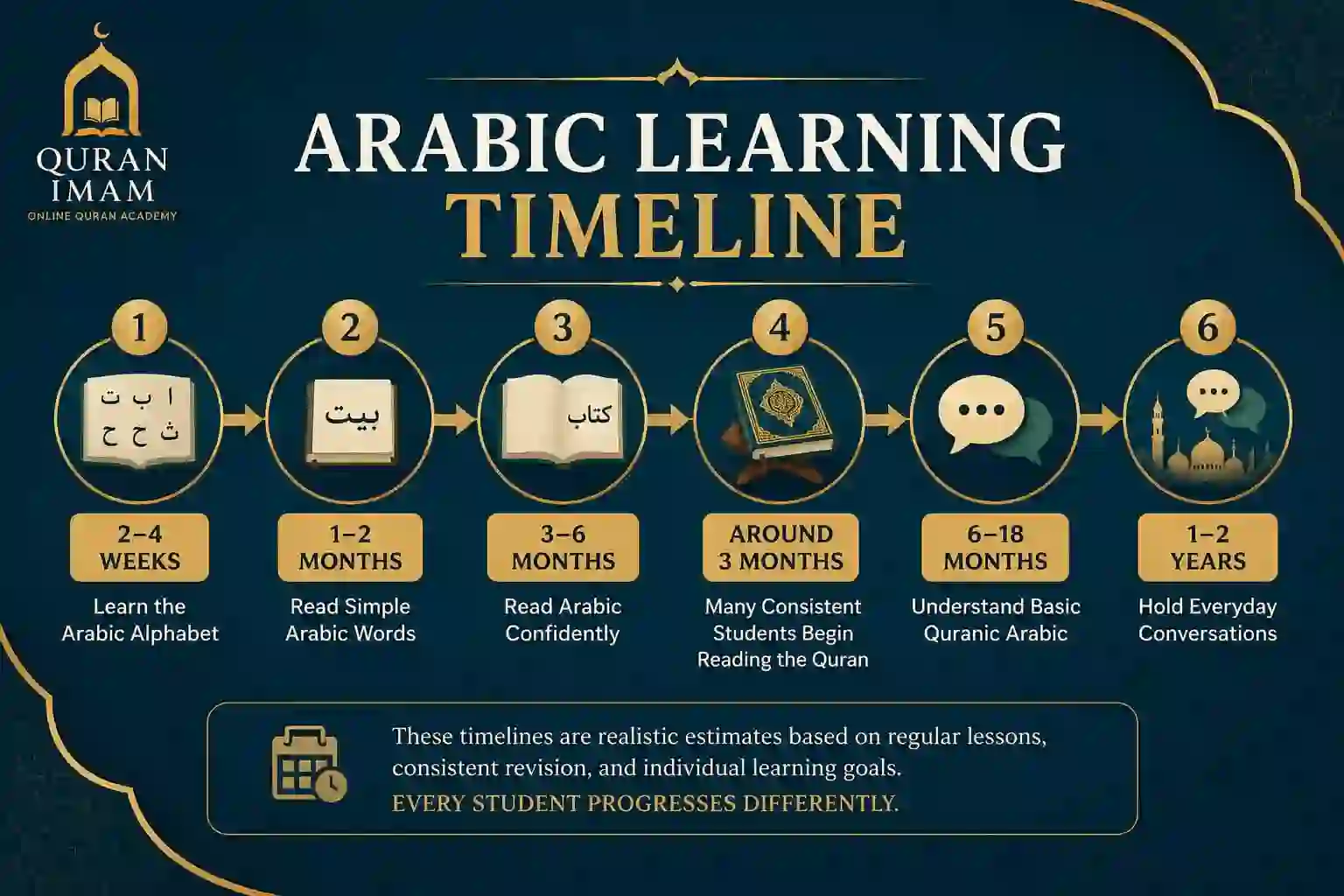
Learning Goal Estimated Timeline
Learn the Arabic alphabet 2–4 weeks
Read simple Arabic words 1–2 months
Read Arabic confidently 3–6 months
Read the Quran with confidence Around 3 months for many consistent beginners
Understand basic Quranic Arabic 6–18 months
Hold everyday conversations 1–2 years
These timelines are realistic estimates based on regular lessons, consistent revision, and individual learning goals. Every student progresses differently.
Is Arabic Really Difficult to Learn?
Arabic is often described as one of the more challenging languages for native English speakers. The writing system, pronunciation, and grammar are different from English, so beginners naturally need time to adjust.
However, “challenging” does not mean impossible.
One of the biggest misconceptions is that Arabic is only for people who grew up speaking it. In reality, thousands of adults and children begin learning Arabic every year without any previous knowledge and make excellent progress through structured study.
At Quran Imam, we’ve taught many students from the UK who started with absolutely no Arabic background. Their first lessons often
include questions such as:
- Will I ever be able to read Arabic?
- Is Arabic too difficult for adults?
- How long will it take before I can read the Quran confidently?
With personalised one-to-one lessons, regular revision, and realistic expectations, those initial concerns gradually become confidence and measurable progress.
If your long-term goal is understanding the Quran rather than everyday conversation, following a structured Quranic Arabic course often provides a more focused learning path because it concentrates on the vocabulary and grammar that appear most frequently in the Quran.
What Does “Learning Arabic” Actually Mean?
Before asking how long does it take to learn Arabic, it’s important to define your goal.
Learning Arabic can mean very different things depending on what you want to achieve.
Some learners want to:
- Read the Quran correctly.
- Understand Quranic verses.
- Speak Arabic while travelling.
- Communicate with Arabic-speaking family members.
- Study Islamic sciences.
- Improve their reading and pronunciation.
- Each objective requires different skills, which is why learning timelines vary so much.
Learning to Read Arabic
For many beginners, reading Arabic is the first important milestone.
This stage focuses on building a strong foundation by learning:
- The Arabic alphabet.
- Short and long vowels.
- Joining letters correctly.
- Accurate pronunciation.
- Reading complete words and simple sentences.
Students who begin with a structured programme to learn how to read Arabic often develop stronger reading habits because they build their skills gradually instead of rushing through the basics.
Many learners are surprised by how quickly they recognise Arabic letters once they practise consistently.
Learning Quranic Arabic
Some learners are not interested in becoming fluent speakers.
Instead, they want to understand the Quran during recitation, prayer, and personal study.
Learning Quranic Arabic usually focuses on:
- Frequently repeated Quranic vocabulary.
- Essential grammar.
- Sentence structure.
- Common linguistic patterns found throughout the Quran.
This pathway is often more focused than studying Modern Standard Arabic because the objective is understanding the language of the Quran rather than everyday conversation.
Students who combine Arabic lessons with Quran classes taught by qualified teachers often find that their reading, vocabulary, and comprehension improve together, creating a stronger overall learning experience.
Learning Conversational Arabic
If your goal is speaking Arabic confidently, you’ll gradually develop several skills together.
These include:
- Listening.
- Speaking.
- Vocabulary.
- Grammar.
- Pronunciation.
- Real-life communication.
Learners following a complete Arabic language course usually practise all of these skills together, allowing them to build confidence in everyday situations while continuing to strengthen their reading ability.
Naturally, becoming conversational takes longer than simply learning to read Arabic because multiple language skills develop simultaneously.
Best Online Tajweed Course in the UK
Online Quran Academy Fees in the UK
1-to-1 Online Quran Classes in London with Native Egyptian Tutors
Quran Class: Learn the Quran with Qualified Teachers Online
How Long Does It Take to Learn the Arabic Alphabet?
For complete beginners, learning the Arabic alphabet is usually the first major achievement.
With regular lessons and daily revision, many learners recognise all 28 Arabic letters within two to four weeks.
During this stage, students learn:
- Letter names.
- Different letter forms.
- Correct pronunciation.
- Joining letters together.
- Reading simple syllables.
Building a strong foundation at this stage makes every later step—whether reading the Quran, learning Tajweed, or developing speaking skills—much easier.
The First Month of Learning Arabic
The first month Is not about becoming fluent.
It is about becoming comfortable with the language.
During the first few weeks, most beginners learn to:
- Recognise every Arabic letter.
- Distinguish similar-looking letters.
- Read short words.
- Improve pronunciation.
- Build confidence while reading aloud.
Students who receive immediate feedback from a qualified teacher usually correct mistakes much earlier than learners studying entirely on their own.
This early confidence often becomes the foundation for long-term success.
Two to Three Months
By this stage, consistent learners usually notice significant progress.
Many students can:
- Read simple Arabic texts.
- Recognise common vocabulary.
- Read short Quranic passages.
- Pronounce Arabic more accurately.
- Read with noticeably greater confidence.
Our teaching experience shows that students attending three one-to-one lessons each week, while revising between sessions, often progress faster because lessons are adapted to
their pace and individual challenges.
For learners whose next goal is mastering correct pronunciation while reciting the Quran, combining Arabic reading skills with Quran recitation with Tajweed rules provides a natural progression without overwhelming the student.
Three to Six Months
One of the most common questions we hear is whether it’s possible to read the Quran confidently after only a few months of study.
The honest answer Is yes for many learners—but not for everyone.
Progress depends on factors such as lesson frequency, revision, motivation, previous language experience, and the quality of teaching. Based on our experience at Quran Imam, many beginners who attend three personalised lessons each week and practise consistently between classes begin reading directly from the Mushaf with growing confidence after around three months. Others may need additional time, and that’s completely normal.
By this stage, many learners are able to:
- Read Arabic more smoothly.
- Recognise a wider range of vocabulary.
- Apply basic grammar naturally while reading.
- Improve pronunciation through regular correction.
- Read longer Quranic passages with greater confidence.
Students who continue practising Quran Tajweed Rules alongside their Arabic lessons often notice further improvements in fluency because accurate pronunciation reinforces confident reading.
Six Months to One Year
After six months of consistent study, Arabic usually starts feeling much more familiar.
Instead of decoding every word individually, learners begin recognising vocabulary and sentence patterns naturally.
Depending on their goals, many students can:
- Read Arabic comfortably.
- Understand frequently repeated Quranic vocabulary.
- Write simple Arabic sentences.
- Follow basic conversations.
- Read short texts with increasing confidence.
For learners whose priority is understanding the Quran, this stage often marks the beginning of meaningful comprehension rather than simply recognising words.
Many students also choose to continue with a structured Learn Arabic Language programme while combining it with Learn Islamic Studies, allowing them to strengthen both their language skills and Islamic knowledge together.
One to Two Years
Students aiming for conversational Arabic usually continue developing their skills over a longer period.
With regular lessons and consistent practice, many learners can eventually:
- Hold everyday conversations.
- Understand spoken Arabic more naturally.
- Read books and articles with greater confidence.
- Continue expanding vocabulary independently.
- Express themselves comfortably in familiar situations.
Students focusing primarily on Quranic Arabic often spend this period deepening their understanding of Quranic vocabulary, grammar, and recurring linguistic patterns found throughout the Quran.
Language learning never truly ends, but after one to two years of consistent study, many learners become independent enough to continue improving through reading, listening, and everyday practice.
What Affects How Quickly You Learn Arabic?
Every learner follows a different journey.
Two students attending the same lessons can make completely different progress depending on their learning habits.
The biggest factors include:
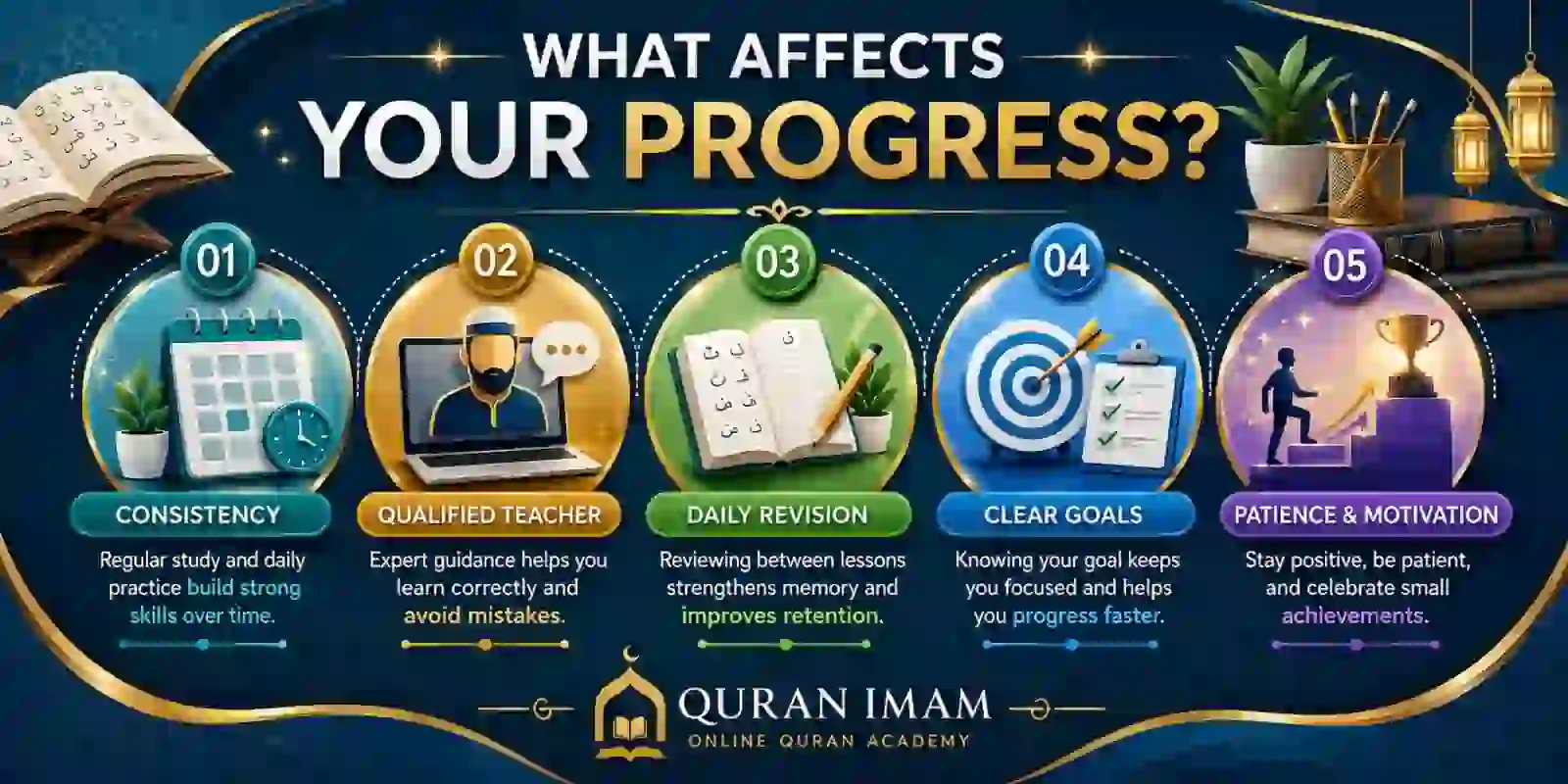
1. Consistency
Learning Arabic for 20–30 minutes most days is generally far more effective than studying for several hours only once a week.
Frequent exposure helps your brain retain vocabulary, pronunciation, and grammar much more effectively.
2. Learning with a Qualified Teacher
An experienced teacher provides much more than explanations.
They help you:
- Correct pronunciation immediately.
- Build confidence.
- Learn at the right pace.
- Avoid developing incorrect habits.
- Stay motivated through structured lessons.
Many learners who choose a private Quran tutor or personalised Arabic teacher make faster progress because every lesson is tailored to their needs instead of following a fixed group pace.

3. Revision Between Lessons
One of the biggest reasons learners forget Arabic is a lack of revision.
Even 15–20 minutes of daily review helps strengthen memory and makes every future lesson easier.
Consistent revision often matters more than adding extra lessons.
4. Clear Learning Goals
Someone learning Arabic for travel will study differently from someone preparing to understand the Quran.
Knowing your goal from the beginning helps create a structured learning plan that saves both time and effort.
5. Motivation and Patience
Arabic is a language built through gradual progress.
Students who celebrate small achievements—such as reading their first page confidently or understanding familiar Quranic vocabulary—are much more likely to remain motivated over the long term.
Can You Learn Arabic Faster?
Yes—but only by learning smarter, not simply studying longer.
The fastest learners usually share the same habits.
They:
- Study consistently every week.
- Revise vocabulary daily.
- Read Arabic aloud.
- Listen to Arabic regularly.
- Practise speaking whenever possible.
- Ask questions during lessons.
- Accept mistakes as part of learning.
Small improvements repeated consistently almost always outperform occasional intensive study sessions.
Common Mistakes That Slow Down Progress
Avoiding these mistakes can save months of unnecessary frustration.
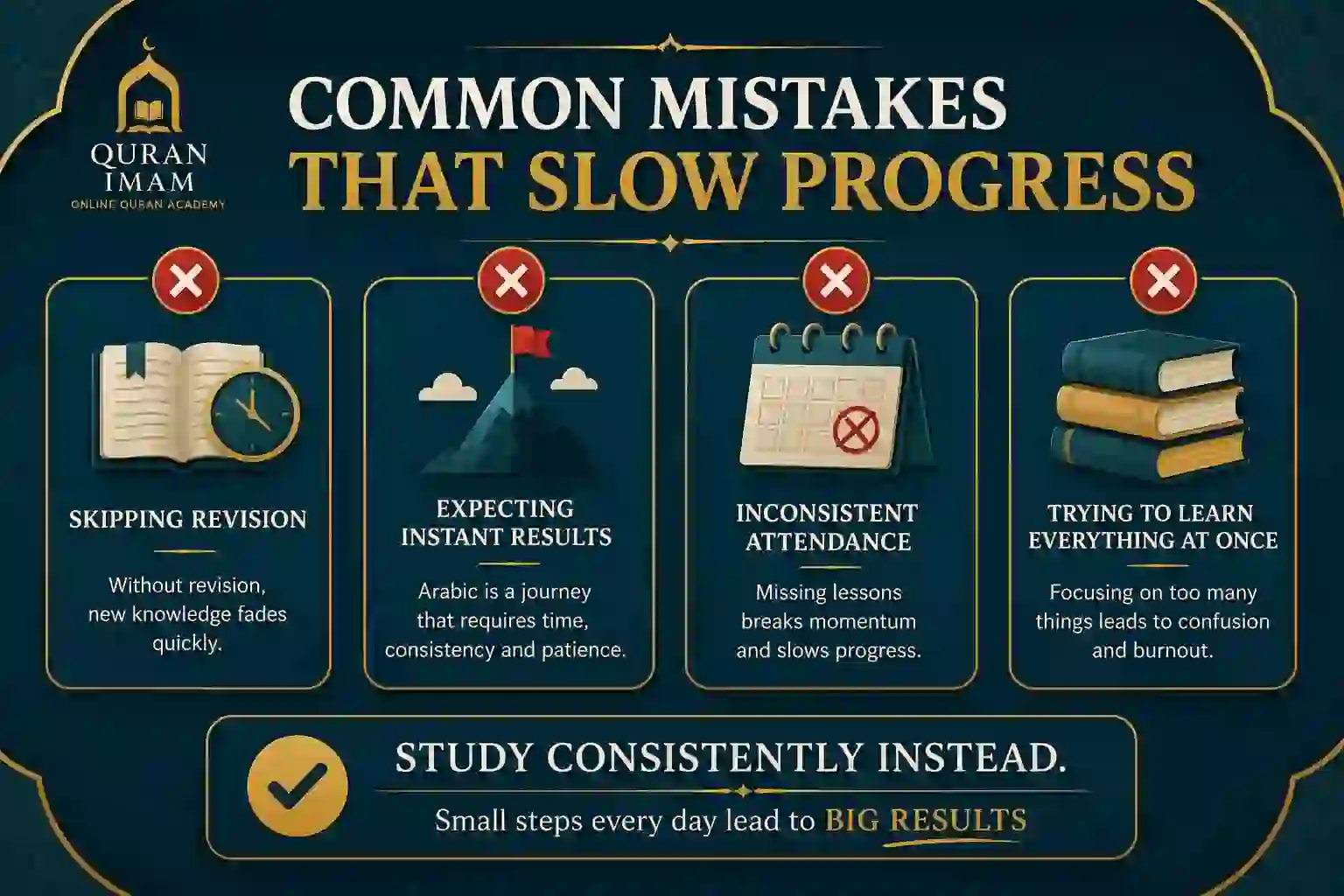
Skipping Revision
Without revision, new vocabulary and reading skills fade quickly.
Regular review builds confidence and improves long-term retention.
Expecting Instant Results
Many beginners expect fluency within a few months.
In reality, learning Arabic is a gradual process, and every stage builds upon the previous one.
Inconsistent Attendance
Missing lessons interrupts momentum.
Students who attend lessons regularly usually make steadier progress than those who study only occasionally.
Trying to Learn Everything at Once
Attempting to master grammar, vocabulary, speaking, writing, reading, and pronunciation simultaneously often leads to frustration.
Following a structured programme allows each skill to develop naturally over time.
Is Arabic Harder Than Other Languages?
Arabic is different from English and many European languages, but different does not always mean harder.
The language introduces learners to:
- A unique alphabet.
- Root-based vocabulary.
- Distinct pronunciation.
- Rich grammar patterns.
These differences can seem challenging at first, but with consistent practice they gradually become familiar.
Every year, thousands of adults with no previous Arabic experience successfully learn the language through structured study.
How Quran Imam Helps Students Learn Arabic
At Quran Imam, we understand that every learner starts from a different place.
Some students cannot recognise a single Arabic letter.
Others already read Arabic but want to understand the Quran more deeply or improve their pronunciation.
That’s why every lesson is personalised according to the student’s:
- Age.
- Current level.
- Learning goals.
- Individual pace.
Our qualified teachers help learners:
- Build a strong foundation in Arabic.
- Improve pronunciation step by step.
- Develop reading confidence.
- Expand vocabulary naturally.
- Understand Quranic Arabic progressively.
Students who later decide to memorise the Quran can continue their journey through our Quran Memorization programme, while advanced learners may eventually work towards Quran Ijazah or even Learn Ten Qira’at (All Riwayahs) under qualified teachers.

Final Thoughts
So, how long does it take to learn Arabic?
For most learners, success depends far more on consistency than natural ability.
Whether your goal is reading Arabic, understanding the Quran, or speaking confidently, steady practice combined with expert guidance produces lasting results.
Every learner progresses at a different pace, so avoid comparing your journey with someone else’s.
Instead, focus on building strong foundations, celebrating small achievements, and staying consistent.
If you’re ready to begin, Quran Imam offers personalised one-to-one lessons designed for children and adults, helping learners progress confidently from their very first Arabic letters to advanced Quranic studies through a structured and supportive learning journey.
Ready to Start Learning Arabic?
Every learner starts somewhere, and the hardest part is often taking the first step. Whether your goal is reading Arabic, understanding the Quran, or building conversational skills, learning with a qualified teacher can help you make steady progress from day one.
At Quran Imam, we offer personalised one-to-one online Arabic lessons for children and adults, taught by qualified teachers and tailored to each student’s level and goals. If you’d like to experience our teaching approach before committing, you can book a free trial lesson and begin your Arabic learning journey with confidence.
Frequently Asked Questions
How long does it take to learn Arabic from scratch?
Many beginners learn the Arabic alphabet within two to four weeks and begin reading simple words shortly afterwards. Becoming confident in reading, speaking, or understanding Arabic depends on consistency and regular practice.
Can I learn Arabic in six months?
Yes. Many learners can read Arabic confidently and understand basic Quranic vocabulary within six months, especially with regular lessons and revision.
Is Arabic harder than English?
Arabic uses a different alphabet and grammar system, but learners often find it much easier than expected once they develop a consistent study routine.
Can adults learn Arabic successfully?
Absolutely. Adults of all ages successfully learn Arabic every year. Motivation, consistency, and effective teaching are usually more important than age.
What is the fastest way to learn Arabic?
The fastest progress usually comes from combining regular lessons, daily revision, practical speaking, and personalised feedback from an experienced teacher.
Can I learn Arabic online?
Yes. Many learners achieve excellent results through personalised online lessons that provide flexibility, immediate feedback, and structured learning.
Can I learn Quranic Arabic without becoming fluent?
Yes. Many students study Quranic Arabic specifically to understand the Quran without aiming for full conversational fluency.
Do I need a teacher to learn Arabic?
Self-study can help, but learning with a qualified teacher usually leads to faster progress, better pronunciation, and greater confidence.
Is it too late to start learning Arabic?
Not at all. People begin learning Arabic at every stage of life, and with consistent effort, meaningful progress is achievable regardless of age.